The I in AICA: Pádraic E. Moore
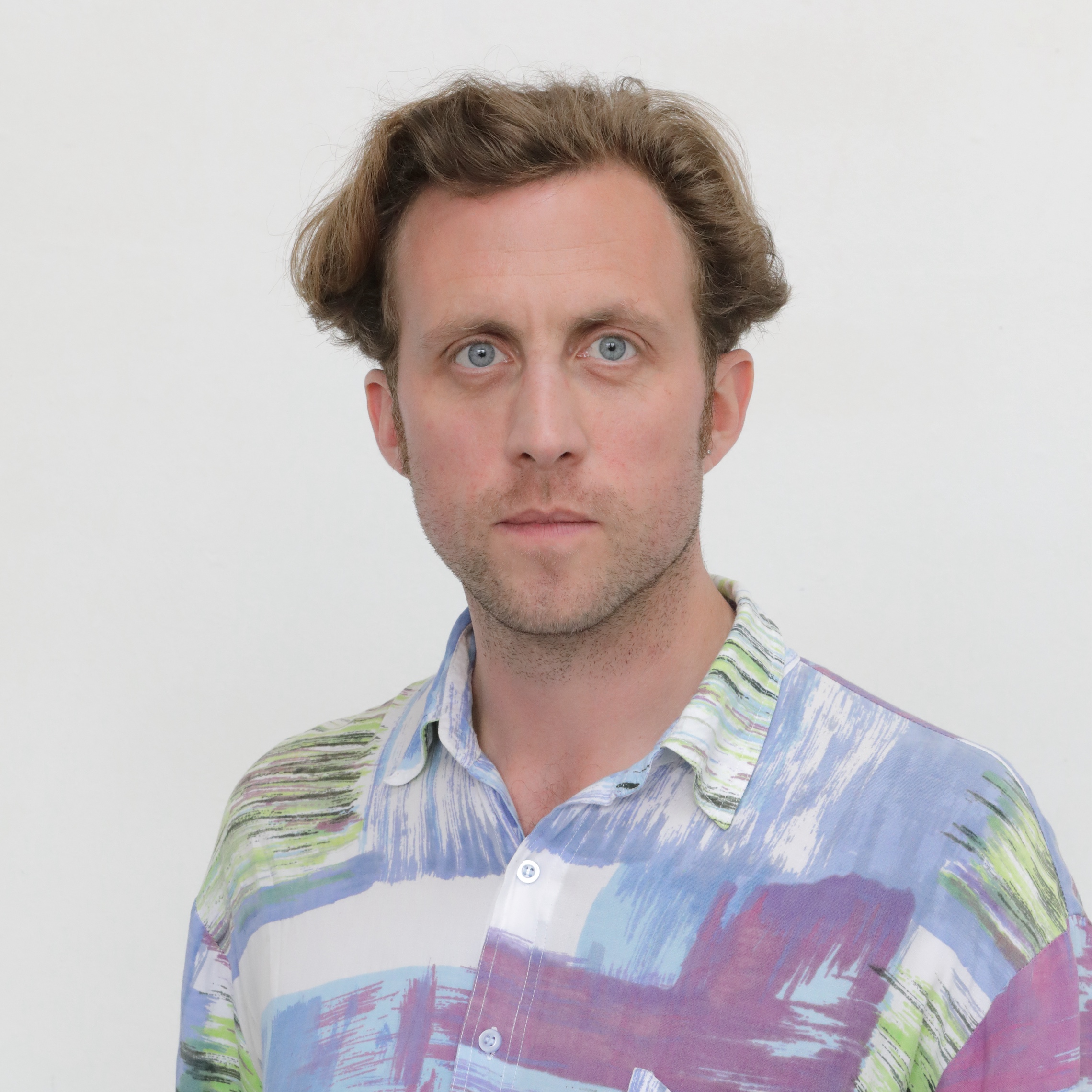
Who makes AICA beyond Switzerland? Here we present AICA Ireland member, Pádraic E. Moore, and ask him about his writing practice. Moore is a writer, curator and art historian; currently Artistic Director of Ormston House, Limerick, in the south west of Ireland, he has equally been involved in projects across Europe. His critical writing has appeared in publications such as ArtReview, Visual Artists News Sheet and Metropolis M.
What are you writing at the moment?
I am currently writing two texts.
An essay to accompany a touring exhibition I am organising, entitled Memory of a Free Festival. The exhibition draws on anti-nuclear festivals that took place annually on Ireland’s south-east coast between 1978 and 1981.
I am also writing a review of a major group exhibition of mediumistic art at London’s College of Psychic Studies curated by Jacqui McIntosh entitled The Medium is the Message. This show features several artists I am particularly interested such as Ann Churchill and Paulina Peavy (1901-1999).
How do you go about writing?
This depends upon what I am writing. Introductory texts for exhibitions necessitate a lot of back and forth with the artist(s) involved. These function as points of mediation and require deep understanding of an artist’s intentions. Exhibition reviews and catalogue essays require in-person visits and close looking.
Observations and factual details form the armature upon which nebulous and subjective material hangs. This armature dissolves as edits progress. Everything requires solitary reflection and time.
The process of writing enables me to refine intuitive responses. By crystallising words into sentences I analyse an artist’s work. My initial responses to art often lie outside or beyond language. And so, writing about art involves arriving at a compromise.
Those old lines by TS Eliot come to mind here – for me the final edit is always ‘between the conception and the creation, between the emotion and the response’ etc.
What do you do, when writing isn’t working?
I summon the muses and invoke divine inspiration. Struggle is an integral part of the writing process for me. There is a cycle of fervour, grind, disillusionment and very occasionally satisfaction.
When there is an impasse I resort to music, frequently listening to the same track repeatedly.
Gina X Performance is one of my go-to bands. I was a major fan for several years before I had the honour of writing liner notes for the re-release of their albums by independent record label Les Disques du Crépuscule.
Who do you write for?
I want my writing to be read and understood by as many people as possible. Whatever I’m writing, whether that’s a press release or review I strive to make my writing accessible. This usually requires the total eradication of ambiguity and stylistic flourish.
I frequently write exhibition texts that function as a point of mediation between artists and audiences. It is essential that the artist is satisfied with the text and that the audiences can apprehend the artwork. At the same time, I’m trying not to fall into the trap of being reductive.
What’s a brilliant text you read recently?
Reba Maybury and Lucy McKenzie’s Pervert or Detective?
Which text annoyed you recently and why?
Exhibition press releases frequently annoy me. International Art English is a scourge that I too have been guilty of proliferating but do my utmost to avoid resorting to. There is a widespread tendency to shoehorn too many references into ancillary texts and they become a fog of incoherence.
Can you make a living from writing?
Words are a vital part of my work but not the mainstay.
Have you ever regretted publishing a text?
I was recently sent a piece of writing I wrote 20 years ago that is being included in a new publication. I winced at how florid and dense my sentences were then.
I’ve no regrets, I just wish I’d been a bit more restrained (with my words) in those salad days.
AICAramba! What should change?
We’ve arrived at a crossroads in terms of our relationship with what was previously referred to as technology. What were once our tools have rapidly evolved into sentient entities that are not inherently benevolent. We need to defend culture – and indeed our human essence – from the implications of this Faustian Pact. We cannot allow the creep of the techno-rational method or mindset to erode cultural production. Ultimately, AI and art criticism are wholly incompatible.
Pádraic E. Moore is a writer, curator, and art historian. He completed CuratorLab, the postgraduate programme at Konstfack University, Stockholm, and is a former resident of the Jan van Eyck Academy, Maastricht. Moore is Artistic Director of Ormston House, a contemporary art gallery in Limerick City, Ireland. He is particularly interested in the format of the group exhibition as a platform for making collective, critical statements. In recent years he has initiated and overseen several significant new commissions. Moore is an active member of AICA Ireland.
More about Pádraic E. Moore and his work: website